Pastoral nomads of the Eurasian steppes traveled in seasonal patterns across established territories in search of fresh pastures for their livestock. They did not maintain permanent homes in any single location. Dependent on trade, they relied on settled agriculturalists for most metal products and certain foods. These exchanges connected dissimilar lifestyles and peoples, becoming a critical cog in the Silk Road network, linking the vast distances of inhospitable terrain between settled communities.
After domesticating the horse around 3500 BC, steppe nomads then bred beasts large enough to ride by the late second millennium BC, dramatically improving their mobility and lifestyle. Trading improved horse breeds gave nomadic groups increased economic power with sedentary civilizations. The subsequent horse-related inventions – chariots, wagons, cavalry, bridles, bits, stirrups and saddles – revolutionized warfare. When combined with the composite bow, the now-militarized steppe nomads became formidable opponents capable of challenging more numerous sedentary cultures. Eventually, tribes joined to form confederations capable of conquering settled, agricultural empires and incorporating them into their domains.
Militarized nomadic confederations – including the Parthian, Kushan and Mongol empires seized established empires. Other nomadic powers formed settled states – such as the numerous Indo-Scythian, Indo-Parthian and Kushano-Sassanian kingdoms – that merged sedentary and itinerant cultures. These nomadic dynasties shared a religious and cultural tolerance that opportunely adapted to their new, sedentary lifestyles, as evidenced in coinage. Adopting the already-established currencies in regions they conquered, they altered them to suit their own economic needs, technological abilities and aesthetic tastes. Through conquest, adaptation and exchange, these nomadic powers not only shaped the political map of Eurasia, but also left a lasting imprint on the cultural and economic landscape of the Silk Road.
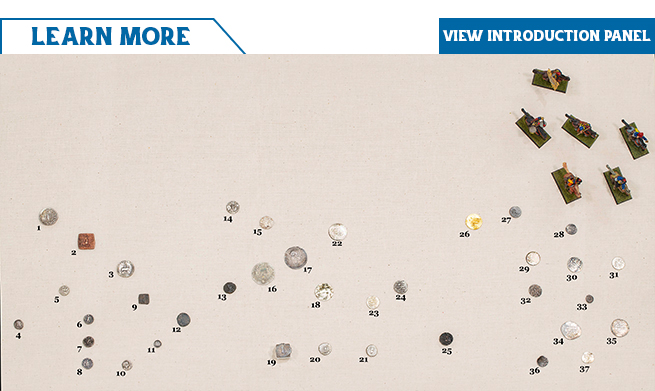
Click on the items in the case image below for an enhanced view