Who Designed the Purple Heart?
Who designed the Purple Heart? On the eve of Veterans Day, Caroline Turco explores the medal’s journey from George Washington’s Badge of Military Merit to today’s symbol of sacrifice—and shares an archival discovery that challenges the familiar account of its creation.
The Dwight N. Manley Numismatic Library preserves John Ray Sinnock’s personal papers, including many of the documents discussed in this episode. Follow the links below to examine the digitized originals.
The visual receipts
Compare the proposals and examine the artwork discussed in this episode.
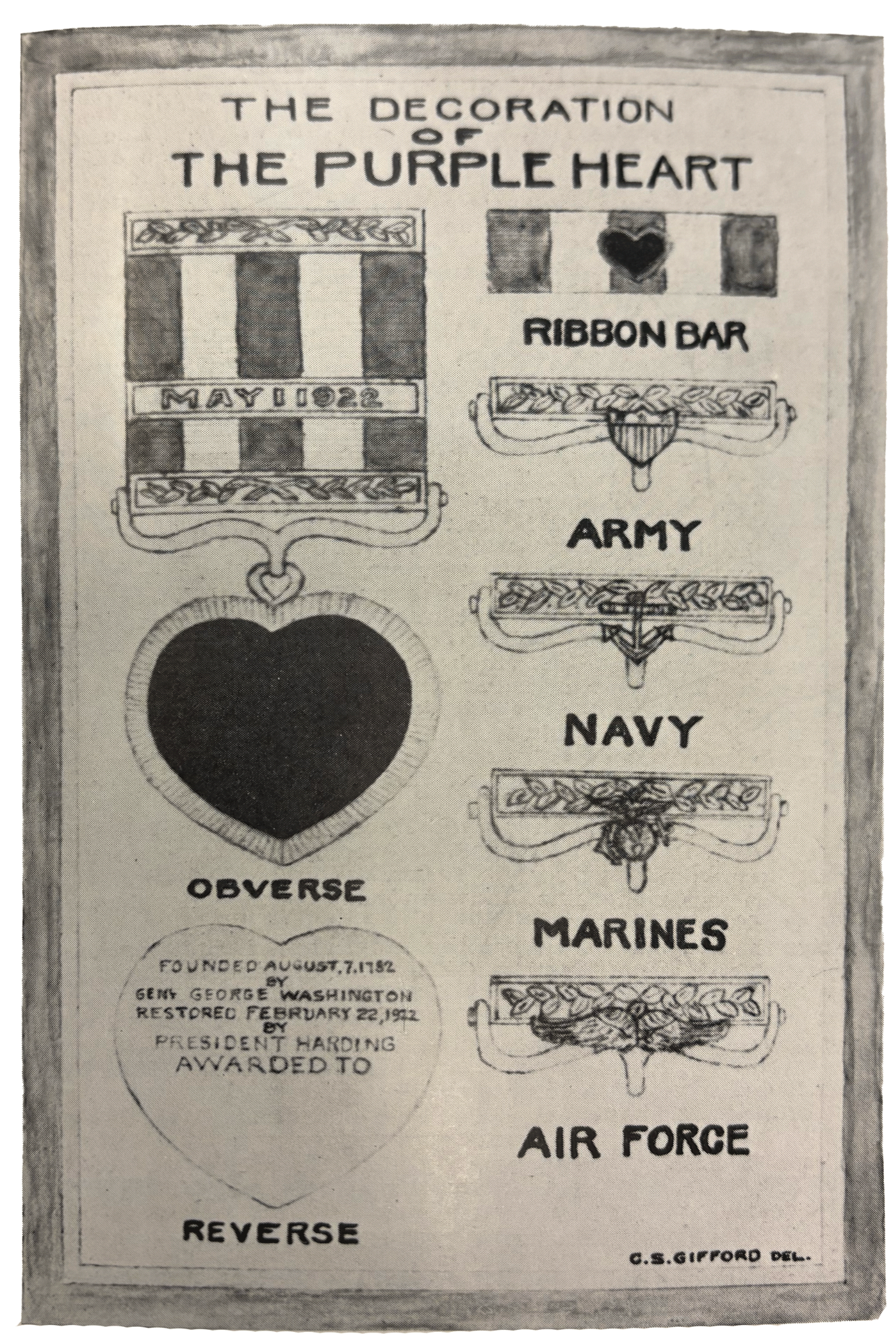
Carleton S. Gifford’s 1921 proposal. An early vision for reviving Washington’s Badge of Military Merit, reproduced in The Numismatist in March 1933. View Gifford’s proposal.
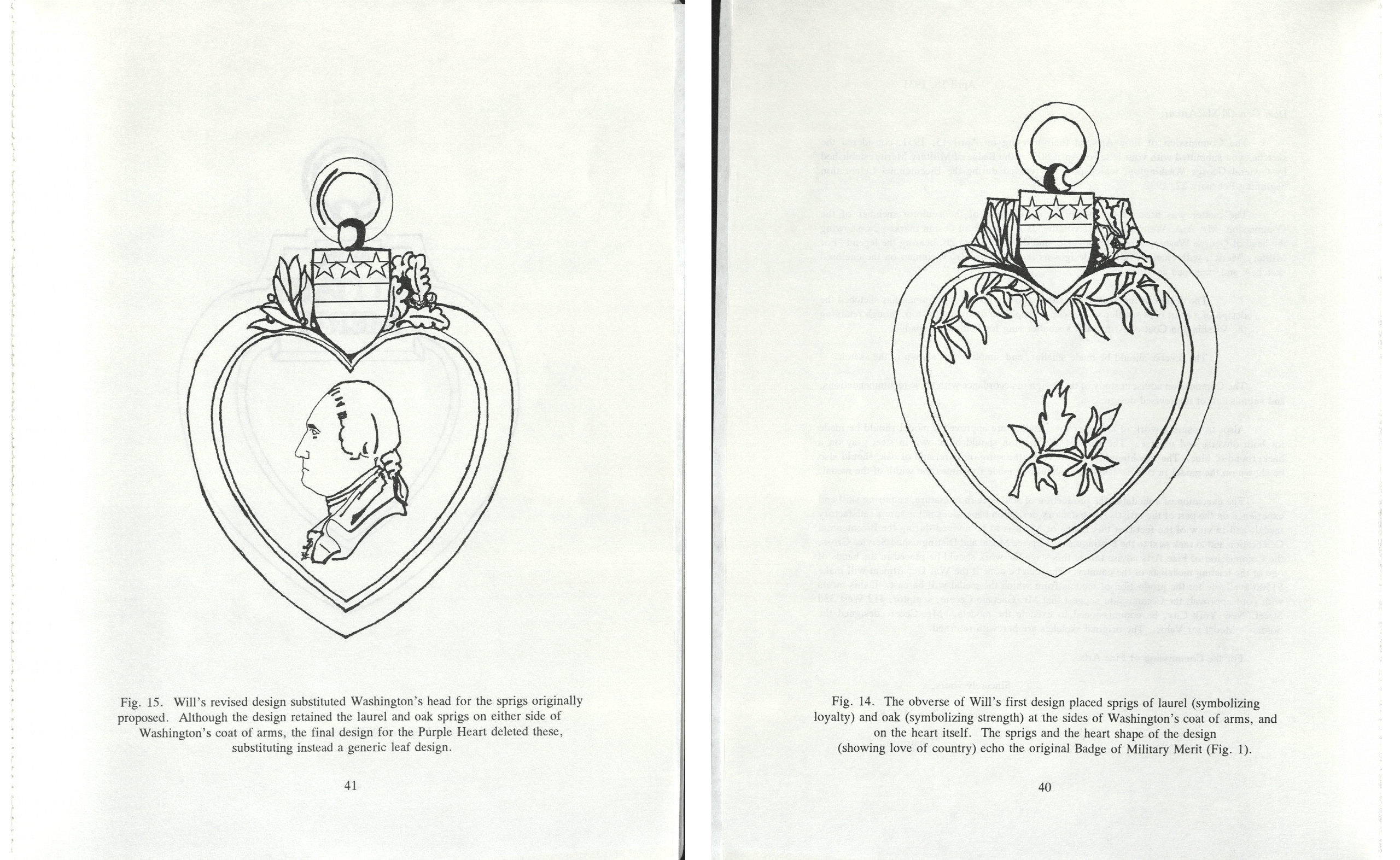
The War Department’s preliminary designs. The drawings submitted to the Commission of Fine Arts for review before the competition. View the preliminary designs.
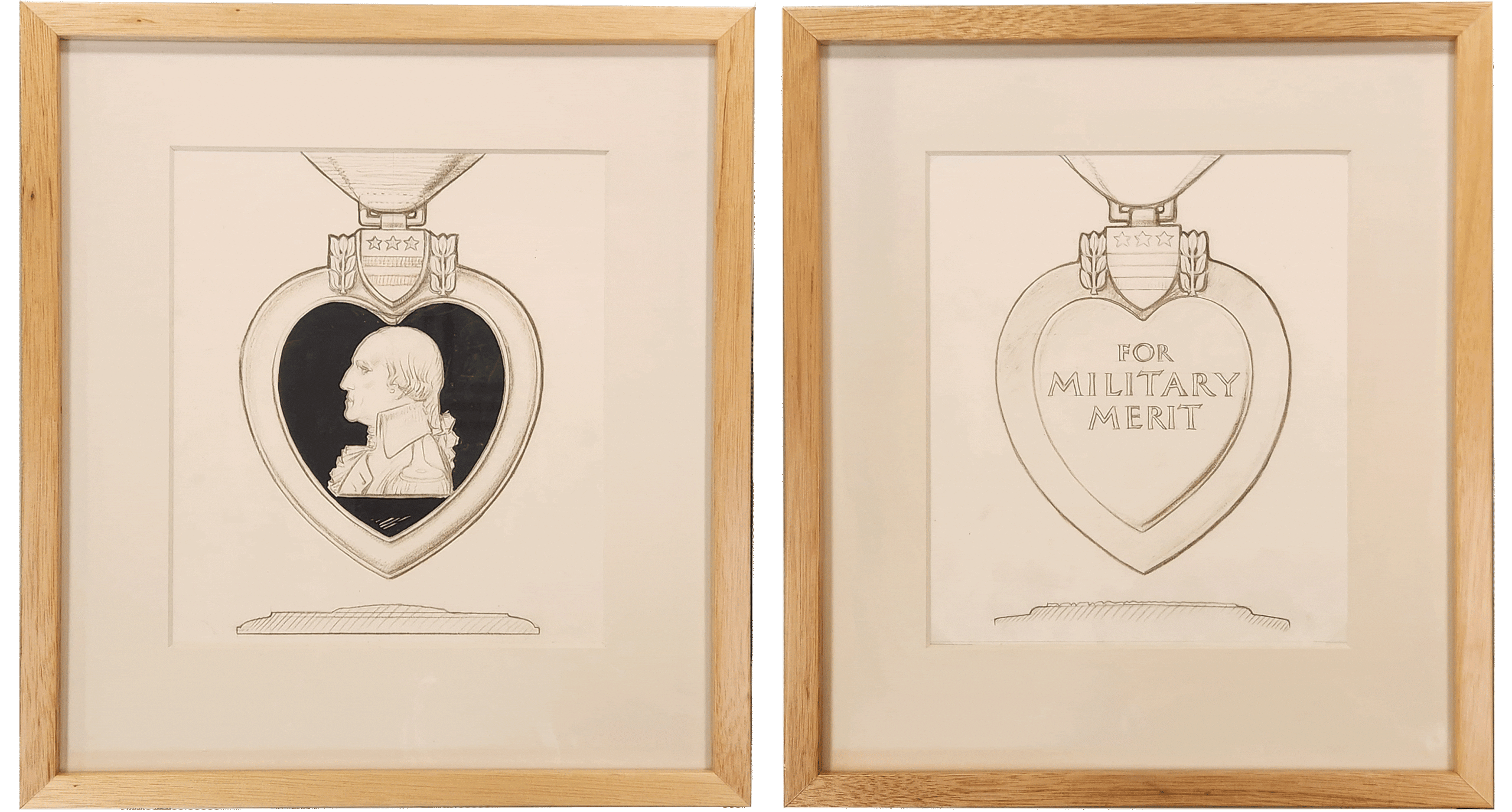
John Ray Sinnock’s signed original sketch. Preserved at the ANA’s Money Museum, this drawing shows Sinnock’s design for the adopted Purple Heart. Compare the heart’s proportions, Washington’s portrait, and the arrangement of the shield and leaves. View Sinnock’s signed sketch.
Commissioning the medal, 1931
The confidential invitation. The War Department invites Sinnock to submit a design and supplies the Commission of Fine Arts’ comments on the preliminary proposals. The three-page letter explains the selection process, the required models, and the proposed $1,500 payment. Read the invitation.
The selection of Sinnock’s drawings. A July 10 letter informs Sinnock that the commission considered his submitted drawings at its May 28 meeting. Read the notification.
The $1,500 government contract. Examine the contract dated July 18, 1931, including its scope and signature page. View the contract.
Further instructions for the selected design. A July 20 letter accompanies the contract and describes adjustments to Washington’s placement and the reverse inscription. Read the instructions.
Reviewing the sculpted models. The commission’s September 28 letter records its consideration of Sinnock’s four plaster models and Weinman’s recommendation of the version in low relief. Read the commission’s response.
The National Geographic correspondence
“Who did it?” On November 10, 1944, editor F. Barrows Colton asks Sinnock who made the drawing visible in a photograph of the artist working on the Purple Heart. Read Colton’s questions.
Sinnock’s answer. His November 11 reply identifies the drawing as his original competition-winning design and explains how he sculpted and reduced the model. Read Sinnock’s reply.
The published photograph. See Sinnock working on the model and read the caption discussed in the episode. View the photograph and caption.
The disputed attribution. The publication’s printed page 51 credits Elizabeth Will with the design and Sinnock with the modeling. Read the entry.
Sinnock’s account of the work. His manuscript, “On Designing the Purple Heart,” describes the competition, artistic decisions, and manufacturing process. Read his account.
The effort to secure recognition
Nellie Tayloe Ross writes to National Geographic. In her March 12, 1947, letter, the director of the U.S. Mint challenges the attribution and reproduces Sinnock’s explanation of his design work. Read the three-page letter.
Ross appeals to Adolph A. Weinman. Her June 1947 correspondence addresses Will’s published claim and asks the sculptor who participated in the selection to help establish proper credit. Read the correspondence.
The National Sculpture Society’s conclusion. Its February 16, 1948, letter reports the council’s finding that Sinnock deserved credit for the redesign. Read the society’s letter.
Ross’s response. On February 25, 1948, Ross expresses her gratitude for the society’s recognition of Sinnock’s authorship. Read her response.
Select the images below for more information.
Archival materials courtesy of the American Numismatic Association’s Dwight N. Manley Numismatic Library.
To all who have served in our nation’s Armed Forces, thank you.
If a Purple Heart has a place in your family, we hope this episode inspires you to share the story—and the name—behind it.
Meet Your Host:
Caroline Turco
Caroline Turco is a Curator at the American Numismatic Association’s Money Museum, where she turns coins, currency, and medals into vivid stories about culture, art, and power. A Renaissance woman at heart, she draws on her eclectic background in art history, operatic performance, museum studies and nonprofit community engagement to bring an uncommon–and highly effective–mix of scholarship, creativity, and curiosity to the field of numismatics.
Caroline’s dynamic storytelling connects audiences to the human dimensions of money, illuminating sweeping histories through small yet mighty coins. Off the clock, she loves adventuring with her family – although she’s probably still talking about money!
